
Agentic AI in Video Security: Hype vs. Reality – By Dream Technologies Ltd.
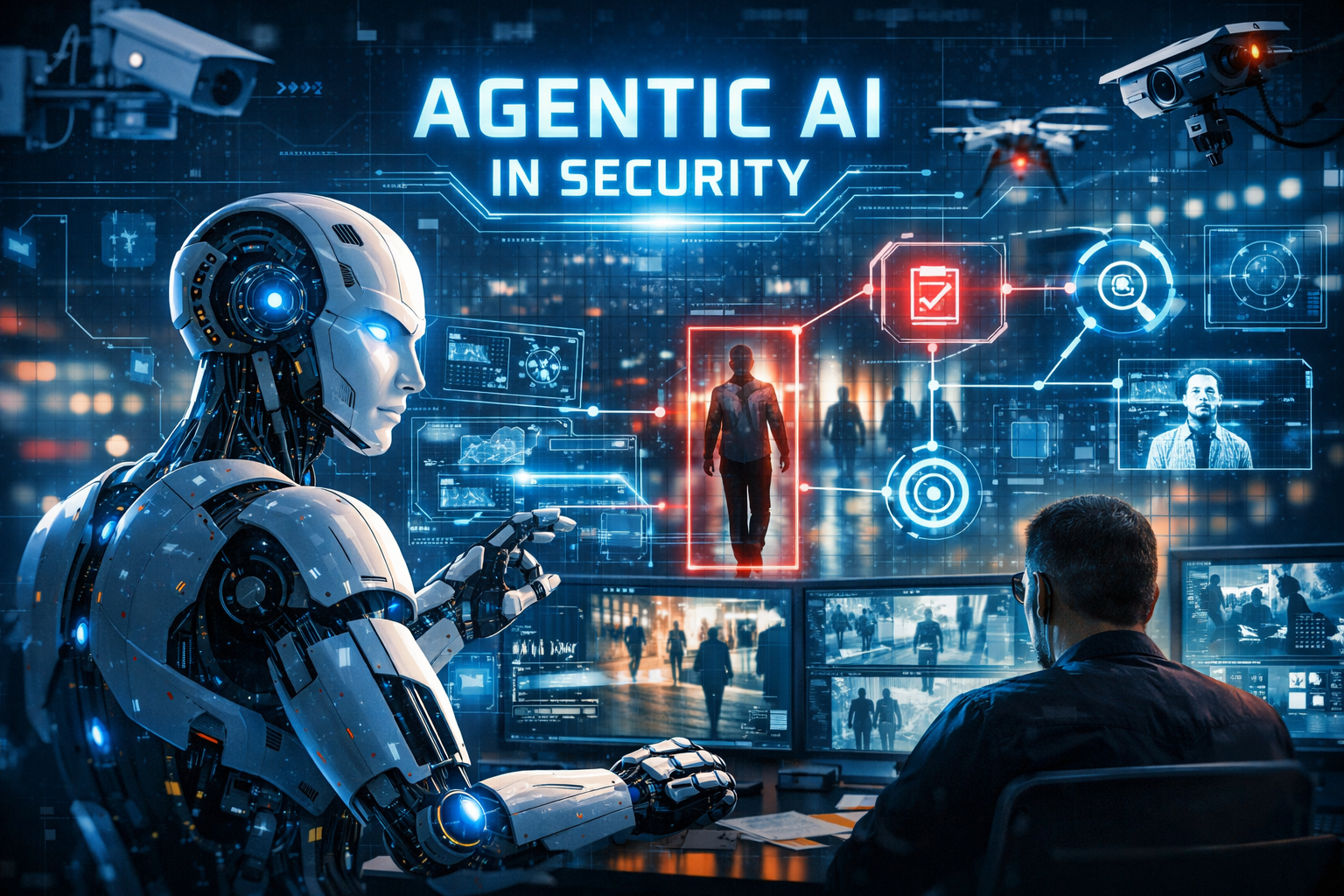
Artificial Intelligence has become the most powerful buzzword in the security industry. Recently, the term “Agentic AI” has been widely used by vendors to market their video analytics platforms. But what does it truly mean, and are today’s solutions genuinely agentic—or simply rebranded detection pipelines? Understanding Agentic AI Antigenic AI is not a marketing invention; it has a precise definition. According to leading research, an Agentic system must:
- Be goal‑directed, not script‑driven.
- Plan and decompose objectives into steps autonomously.
- Use tools dynamically and adapt to environmental feedback.
- Retain memory across tasks and re‑plan when failures occur.
In short, a genuine agentic system composes its own path at runtime. It is autonomous, adaptive, and capable of multi‑step reasoning.
What Most Video Analytics Really Are Strip away the branding, and most modern video analytics solutions follow a deterministic pipeline:
- Object detection (person, vehicle, firearm, smoke).
- Classification and tracking across frames.
- Human‑configured rules engine (“if firearm detected in zone A, raise alert”).
- Event triggering and operator notification.
This architecture is brilliant engineering—but it is not agentic. It is a workflow, designed and scripted by engineers, not a system that sets goals or adapts independently. The Risks of Mislabeling
Scylla AI’s analyst team has warned against “AI snake oil” in video security. Their findings highlight several risks:
- Inconsistency: Agentic systems built on LLMs are stochastic, producing different outcomes in identical scenarios.
- Hallucinations: Generative models can produce false or misleading outputs, which is unacceptable in high‑stakes security.
- Accountability gaps: Security demands explainability. An agent that acts without transparent reasoning creates liability issues.
For mission‑critical environments—airports, ports, banks, and government facilities—deterministic, explainable systems are far safer than experimental autonomy.
Why the Hype Exists
Gartner places Agentic AI at the Peak of Inflated Expectations in its 2026 Hype Cycle. With over 60% of organizations expressing intent to deploy AI agents but only 17% actually doing so, the gap between aspiration and reality is wide. Vendors exploit this gap by rebranding existing detection systems as “agentic.”
The Path Forward At Dream Technologies Ltd., we believe the future of video security lies in balanced architectures:
- Deterministic detection at the edge for life‑safety decisions.
- AI assistants for retrieval, summarization, and operator support.
- Human‑in‑the‑loop oversight for every consequential action. This hybrid approach ensures reliability, accountability, and trust—while gradually introducing agentic capabilities within safe boundaries.
- Conclusion Agentic AI will eventually transform video security, but today’s reality is far narrower than the hype suggests. Security buyers should demand transparency, validate claims under their own conditions, and price solutions for what they truly are. At Dream Technologies Ltd., our commitment is clear: deliver reliable, explainable, and future‑ready AI solutions that empower human operators, not replace them.